When we look at earth as it exisited in its most early days it is unrecognizable. The surface is rocky and hot. The atmosphere is comprised of mainly hydrogen and helium. There is a distinct lack of water both on the surface and in the atmosphere. There is almost no chance for life to evolve in this inhospitable place. If this was the case then how did life evolve? The answer is that the environment first had to change.
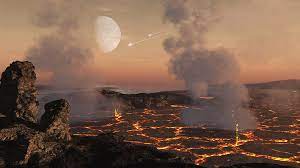
As the earth was first forming large amounts of gass were trapped in the crust. This led to large pockets of water and gas forming underneath the earths surface. As the planet settled it began to heat up due to the high pressures. This heat traveled to the surface and escaped through volcanos. These early volcanos released much of the gass trapped in the crust forming an early atmosphere. The water vapor released eventually cooled allowing the first oceans to form. This water vapor combined with ice delivered on asteroids and comets formed the earliest oceans.
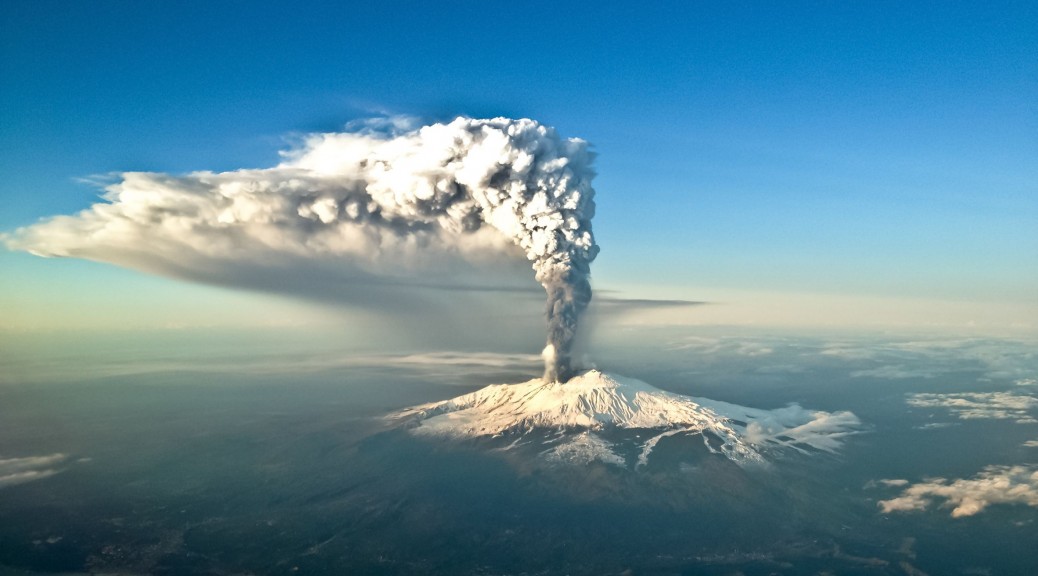
We know that in these early oceans the first lifeforms evolved. They consumed simple compounts in order to produce energy but over time photosynthetic organisms evolved. This led to an explosion in the ammount of oxygen being produced. There is something curious that happened in this period. Despite the large quantities of oxygen being produced the atmospheric levels of oxygen remained very low. This is due to volcanic activity.
The gass being released from these volcanos reaced with the oxygen in the atmosphere leaving no oxygen left behind it was not until the early photosynthetic life produced more oxygen then the volcanos could scrub was the atmosphere finaly oxygenated. This oxygen allowed complex life to form, as most complex life we know of consumed oxygen. These early volcanos had a profound impact on the evolution of life on earth due to their influence over the composition of the atmosphere.

 Life and Geology